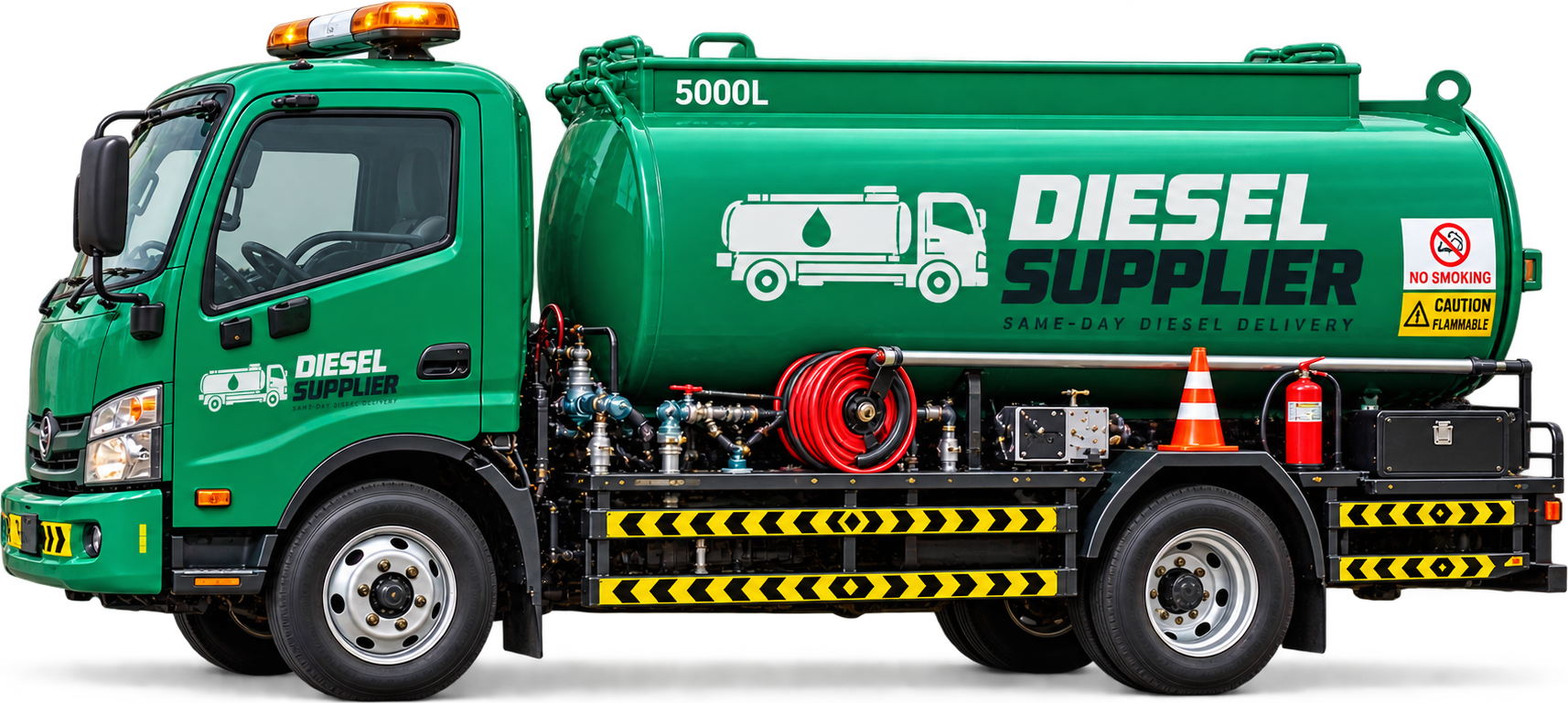
Diesel supply
Fleet Diesel Supply in the UAE
Refuel your trucks, buses and vans at your own yard, so drivers start the day with a full tank.
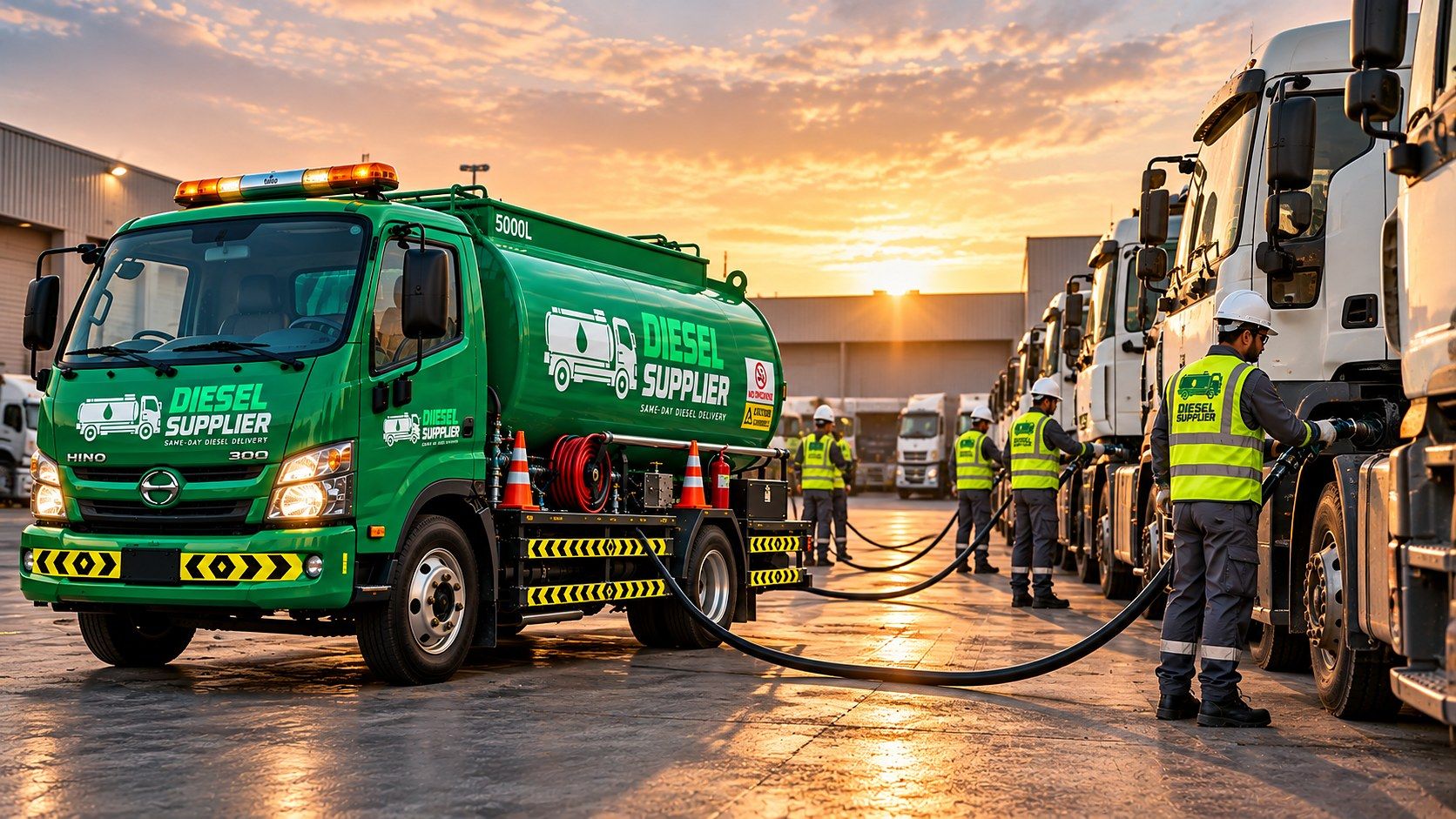
On-Site Refuelling for Fleets
Every trip to a fuel station takes a driver off the road. With on-site refuelling, our tanker comes to your yard or depot, and vehicles are filled while they are parked. Drivers save time, and your fleet manager does not need to plan fuel stops.
We can refuel in the early morning or in the evening if you tell us the time you need, and we confirm what is possible. For regular fleets, we can set up a fixed schedule.
Who Uses Fleet Refuelling
-
Transport and trucking companies
Trucks and trailers filled in your own yard.
-
Bus and staff transport operators
Buses refuelled between shifts.
-
Logistics and warehouse operators
Delivery vehicles and forklifts refuelled on site.
-
Contractors with many machines
Trucks and equipment fuelled in one visit.
The Hidden Cost of Fuel Station Trips
Driver and vehicle time
A fuel stop looks small, but it adds up. The driver drives to the station, waits, pays, drives back and sometimes finds the yard gate busy again. Say 20 vehicles each lose 20 minutes when they refuel at a station, and each refuels twice a week. That is more than 13 hours of driver and vehicle time every week. The numbers are only an example, so use your own.
Detours and queues
Stations are busiest in the morning and in the evening, the same hours your vehicles want to be on the road. A delivery moves the fuelling to a time when the vehicles are parked and idle.
Late starts
One vehicle that leaves late can delay a delivery round or a staff run. When every vehicle starts with a full tank, the day begins on time.
How Refuelling Works in Your Yard
Where vehicles park
The simplest setup is a row of vehicles with the fuel cap side facing the same way, and a clear lane for the tanker. Tell us how your yard is laid out and where the gate is, and we plan where the tanker stops.
The order of filling
The driver fills one vehicle after another. If some vehicles must leave early, tell us, and they go first. If the fleet is large, it helps to give the driver a list of the vehicles in parking order.
The right time
Many fleets choose the early morning, before the first run, or the evening, after the last one. Tell us your hours, and we confirm if we can match them.
Planning for Different Kinds of Fleets
Trucks and trailers
Large tanks take a lot of diesel, and a full fill takes longer. Tell us the tank sizes and how many trucks you want filled each visit, so we can plan the time.
Buses and staff transport
Buses often park together at night and leave at the same time in the morning. This makes them well suited to a regular evening or early morning visit.
Vans and light delivery vehicles
Vans have smaller tanks and refuel often. A regular weekly visit usually works better than many small orders.
Mixed fleets and equipment
Many yards also have forklifts, loaders or generators. Add them to your list, and the driver can fill them in the same visit.
Working Out How Much Diesel Your Fleet Needs
Start with a simple count. For each type of vehicle, note the tank size and how many times a week it refuels. Multiply, then add the types together. For example, 10 trucks that each take about 200 litres twice a week use about 4,000 litres a week. Again, this is only an example.
If you do not have the numbers, look at the last month of fuel receipts. Divide the total by four to get a weekly figure. We can start with that, and adjust after the first deliveries.
Keeping a Record for Each Vehicle
A good record does not need special software. A shared sheet is enough. For every refuel, write down:
- The date and the vehicle number.
- The litres put into the tank.
- The odometer or the engine hours.
- The name of the person who watched the fuelling.
After a few weeks, you can see which vehicles use more than the others. That helps you find a fault, a bad habit or a route that needs a change. If you need a document from us for your records, tell us when you order, and we confirm what is available.
Fuel Caps, Keys and Security
Fuel is easy to lose when nobody is watching. Make sure every vehicle has a working fuel cap, and keep the keys of locked caps with one person who is present during the visit. Ask drivers not to leave tanks open. These habits also protect the engine, because they keep dust out of the tank.
Setting Up a Regular Fleet Schedule
Most fleets settle into a rhythm after the first month. A common pattern is one or two fixed visits a week, set after your busiest days. We suggest a schedule from your numbers, and you can change it as your routes change. Tell us about busy seasons, new vehicles and parked vehicles that will not need fuel, so the amount fits your real use.
Peak Weeks and Quiet Weeks
Fleet use is rarely the same every week. Month-end rushes, holiday periods and busy seasons all raise the number of kilometres your vehicles drive, and with it the diesel they burn. In quiet weeks, the opposite happens. If you know a busy period is coming, tell us a week ahead, and we raise the amount. If a quiet period is coming, tell us as well, so the tanks are not left full of diesel that sits unused.
What to Send for a Fleet Quote
These details let us plan the visit and the amount.
- The number and types of vehicles, such as trucks, buses and vans.
- The tank size of each type, if you know it.
- Where the vehicles park, with a pin for the yard gate.
- The hours when the vehicles are parked and can be refuelled.
- Whether you have more than one yard or depot.
- Gate rules, passes and the person who will meet the driver.
How Fleet Refuelling Works
-
Tell us about your fleet
Share the number of vehicles, where they are parked and the fuel they use.
-
Agree time and schedule
We confirm the delivery time, once or on a regular schedule.
-
Vehicles are refuelled
The driver fills each vehicle in turn, following safe fuelling steps.
Safe Refuelling in a Busy Yard
A yard full of vehicles needs clear rules. Our drivers wear safety gear, and the truck has warning signs and safety equipment. Keep the fuelling area clear of people who are not part of the job, ask drivers to switch off engines, and keep smoking and open flames away from the tanker. Do not move a vehicle while the hose is connected to it.
Fleet Diesel Across the UAE
We refuel fleets in yards and depots in every emirate. Pick your emirate for local details, or send us the location of your yard.
Related Services
Questions
Fleet Diesel Supply FAQs
Can you refuel many vehicles in one visit?
Yes. Tell us how many vehicles there are and how much each one uses. We confirm how much we can fill in one visit and plan the order.
Can you refuel vehicles in the evening or early morning?
Tell us the time you need and we confirm if we can arrange it. It depends on your location and our schedule.
Can I get a regular weekly refuelling schedule?
Yes. Tell us how many vehicles you have and when they are parked, and we suggest a weekly plan.
Do you need access to my vehicles' fuel tanks?
The driver needs to reach each tank with the hose. Park vehicles so the fuel cap side is easy to reach, and tell us about any locked caps.
How do I work out my fleet's weekly diesel use?
Add up the diesel for each vehicle type: tank size times the number of refuels a week. Or take the last month of fuel receipts and divide by four. A rough figure is enough to start.
What if I have vehicles in more than one yard?
Send every location and the vehicles at each one. We tell you how we can plan the visits, and whether yards that are close to each other can be done in one trip.
What should I do if a vehicle is not ready at the agreed time?
Tell the driver or call us. The driver can fill the other vehicles first and come back to it, if time allows.
Ask for a Fleet Diesel Quote
Tell us about your vehicles and your yard. We suggest a schedule and send a clear quote.